
HOW TO SAND SKIRTING BOARDS
Sanding skirting boards is an essential part of repainting your woodwork. Cleaning and sanding your skirting boards will remove any dust or old, flaking paint, ensuring that the fresh coat of paint adheres properly for a smooth, flawless finish.
In this guide, we’ll explain how to sand your skirting boards, covering everything from how much sanding is needed before painting skirting to the best Gator products for the job.
How to sand skirting boards prior to painting
Did you know you can sand your skirting boards in just four easy steps? Here’s how you do it:
1. Prepare the room
First things first, put down dust sheets to protect your flooring and make sure that you have enough space to work.
2. Clean the skirting boards
It’s important to remove any dust, dirt or fingerprints from your skirting boards as this can make sanding more difficult and affect paint adhesion. Making sure to dilute as directed, apply sugar soap to your skirting boards and wipe them down with a clean sponge. Once the surface has been thoroughly cleaned, rinse with warm water to remove any soap residue. Leave to dry.
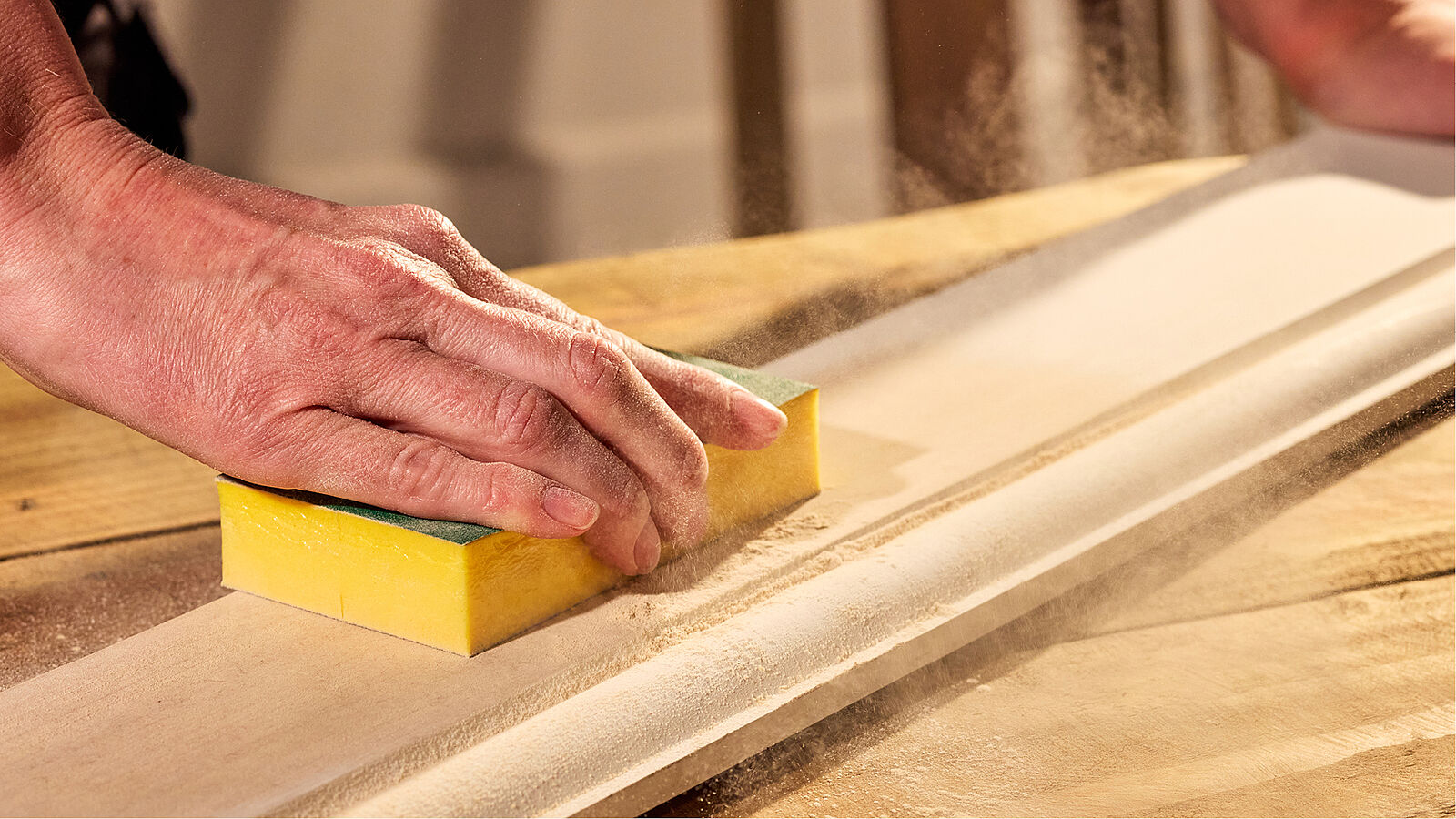
3. Select the right product and grit
We recommend using our Super Sponge sanding sponges to sand your skirting boards. The durable foam core flexes, allowing you to easily sand any curved detailing. Alternatively, our Premium Sandpaper sheets are also good for uneven surfaces, as they can be folded into the shape you need without cracking or tearing.
For more intricate detailing, our Micro Zip™ Sanding Block is also a good choice, as the small, hand-held tool is specifically designed for tight spaces.
If you’re sanding down years of old paint, select a lower grit of around 60 (from the Remove range) for a coarser sandpaper. If you're just making the surface smooth, go for a higher grit number of 80 – 100 (also from the Remove range) or 120 (from the Prepare range).
We recommend starting out with a lower number grit and working up to a higher grit for the best possible finish.
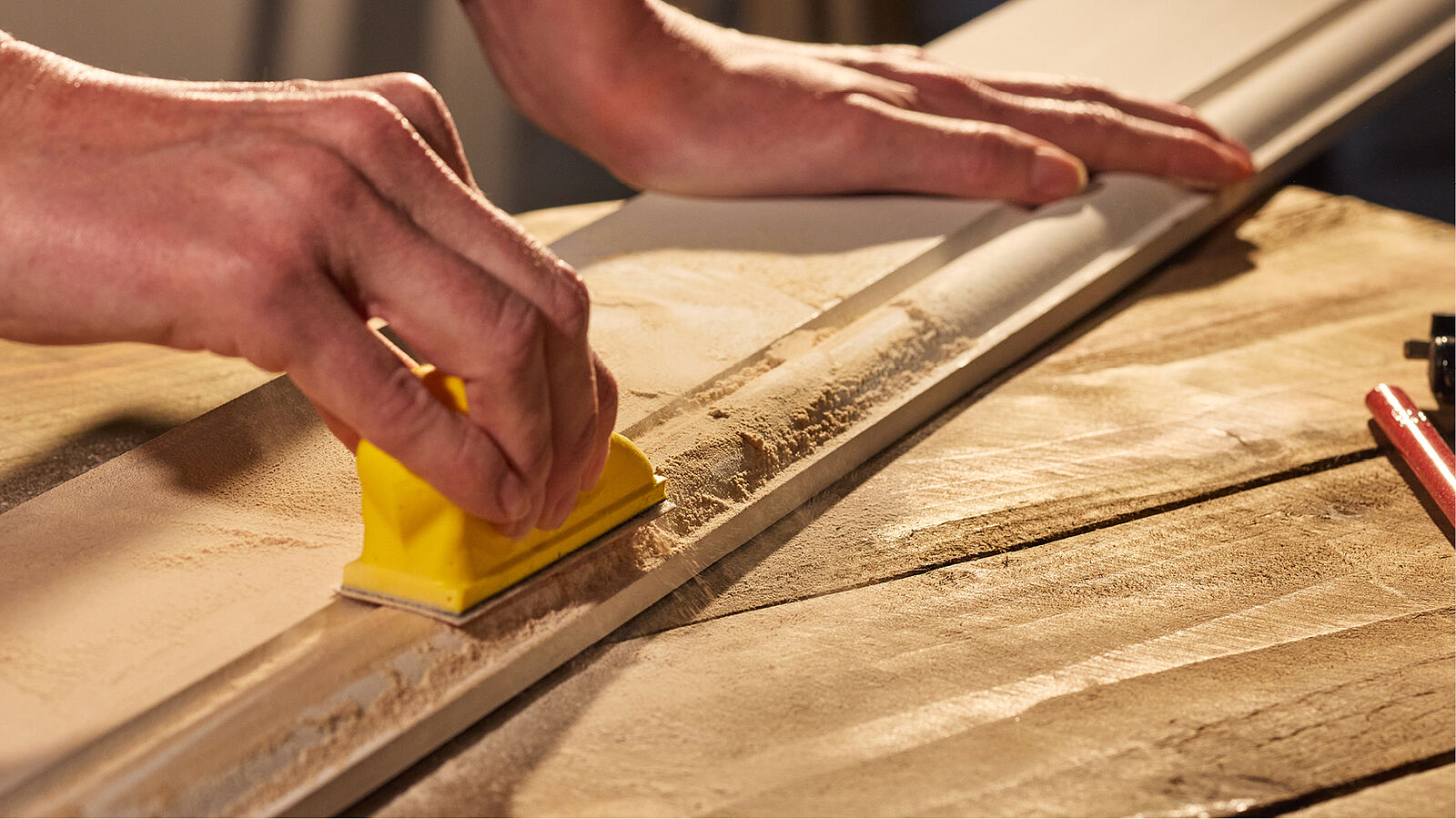
4. Sand the skirting boards
Now you’re ready to start sanding. Using your sandpaper or sanding tool, sand the skirting boards down until the surface is smooth. Check that the surface is smooth enough by carefully running your hand across to identify any rough areas you might have missed.
Intricate skirting might take longer to sand; this is when you’ll benefit from using the Gator® Micro Zip Sanding Block for those tricky nooks and crannies.
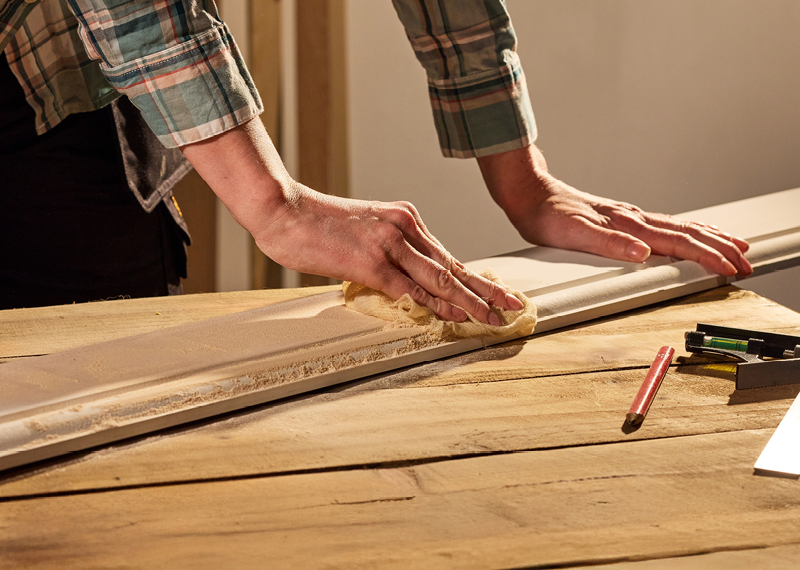
Once completely smooth, allow the dust to settle before wiping down the skirting board with a clean cloth. Make sure to remove all excess dust, as it will interfere with the paint adhesion.
Now your skirting boards are thoroughly sanded, clean and ready for painting!
5. Sand inbetween coats
When repainting skirting boards, it's wise to lightly sand the skirting in between coats. Don't worry; this won't undo all of your hard work. Rather, it will simply smooth out any imperfections or brush strokes, leaving you with a smoother finish.
Look for any grits in our ‘Finish’ range. They range from 220 to 400 grit; a lower number is best if you have a lot of imperfections to even out, while a higher grit offers light-touch finishing.
From premium sandpaper sheets to our innovative Zip sanding tools, Gator has a wide range of high-quality finishing products in our hand sanding range to suit your sanding project. Looking to sand down your walls next? Check out our handy guide on how to sand a wall prior to painting.
Want to refresh your woodwork? Check out our blog post on how to sand skirting boards using Gator finishing products for a smooth, flawless finish.
Related products
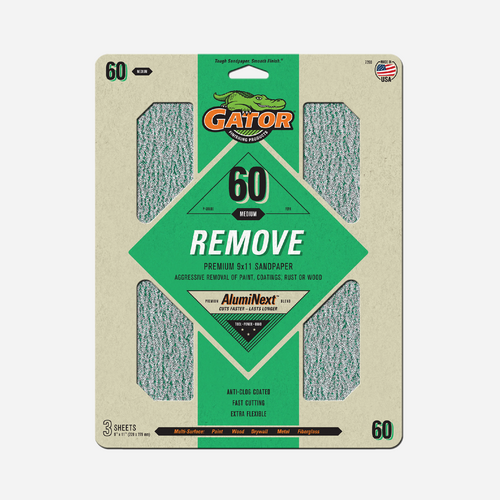
GATOR® 9X11 PREMIUM SANDING SHEETS
- Gator® Premium Sanding Sheets provide maximum performance and long life. The durable aluminium-oxide is bonded to a flexible latex paper making it perfect for hand sanding of irregular surfaces.
- Extra flexible paper allows folding without cracking or tearing.
- For hand or machine sanding.
- Cut to fit 1/2 sheet, 1/3 sheet, or 1/4 sheet orbital sander.
- For use on wood, metal, drywall, fibreglass, and painted surfaces.
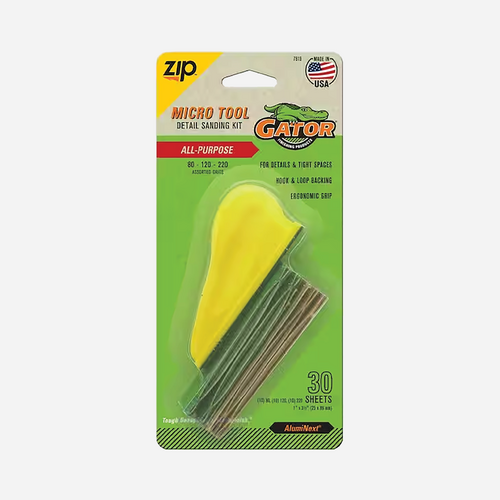
GATOR® MICRO ZIP™ SANDING BLOCK KIT
- Micro Zip™ sanding kit includes a comfortable sander and 30 premium sanding sheets in 3 grits.
- Easily sand small details, into tight spaces and corners. Perfect for small repairs, refinishing and craft projects.
- Hook & loop backing makes changing sanding sheets quick and easy.
- Ergonomically designed to reduce stress on hand and provide maximum control.
- Includes premium sanding sheets for multi-purpose use.
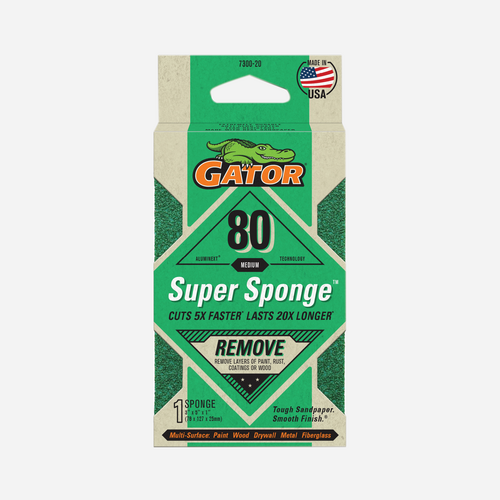
GATOR® SUPER SANDING SPONGE
- The ultimate hand sanding block for almost any project, these proprietary sanding sponges are made with premium AlumiNext™ sandpaper fused to a durable foam core for increased performance and comfort while sanding.
- Cuts 5x faster and lasts 20x longer than conventional glue-on-grit foam sponges.
- Anti-clog coating resists build up on paper during use
- Heavy duty construction resists tearing, cracking and deformation.
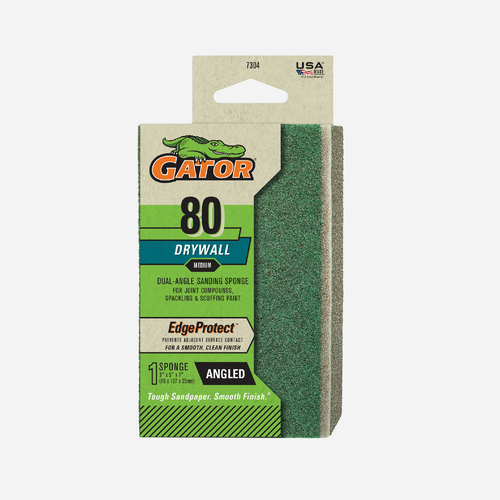
GATOR® DUAL ANGLE SANDING SPONGE
- Four-sided sanding sponges for all-purpose use. Features the patented EdgeProtect™ stripe that keeps adjacent surfaces from damage during use.
- For use on corners and edges.
- Four-sided sanding surfaces for maximum use.
- Can be rinsed & re-used.